Wingiler44 Game Providers: Understanding Different Casino Software Providers
Quick Summary
Open two casino games from the same platform and they can feel completely different. One may use animated reels and bonus features, another may stream a live casino table, while another can feel closer to an arcade game.
Much of that difference comes from the game provider behind the software.
The Wingiler44 Games directory lists providers including Pragmatic Play, JILI, Evolution, Microgaming, CQ9, Playtech, Spadegaming and JDB. These names cover different areas of casino gaming, from slots and live casino to fishing and arcade-style formats.
But the provider name is only part of the picture. Individual games can have different rules, RTP information, volatility, betting ranges and features even when they come from the same provider.
This guide looks beyond the logos to explain what casino game providers actually do and what players should examine when comparing games.
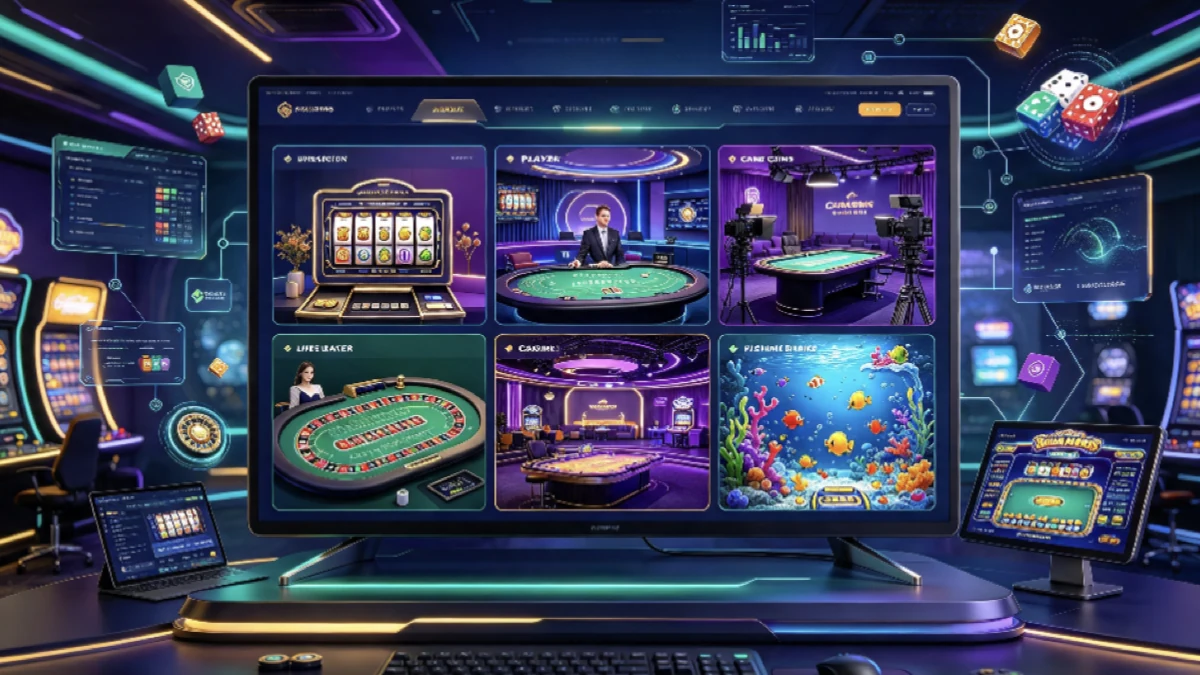
What Does a Casino Game Provider Actually Do?
Open two casino games side by side and they may look as though they came from completely different platforms.
One might drop you into a polished live studio with real-time video. Another opens with animated reels, colourful symbols and bonus features. Switch again and you could find yourself in a fishing-style game that feels closer to an arcade experience.
Yet all three can appear inside the same game library.
The difference often starts with one name players see but rarely think much about: the game provider.
A casino platform can bring games from multiple software companies together in one place. Those companies develop the technology and game experiences that players actually interact with.
In simple terms, think of it like this:
Platform → Game Provider → Individual Game
The provider may be responsible for areas such as:
- Game development
- Graphics and animation
- Game mathematics
- Sound and visual effects
- User interface design
- Mobile optimization
- Game rules and features
- Live-streaming technology for dealer games
This is why knowing the provider can tell you something about the type of experience you're opening.
But it doesn't tell you everything.
Two titles from the same provider can still have very different mechanics, rules and mathematical characteristics.
Which Game Providers Are Listed on Wingiler44?
The Wingiler44 Games directory currently presents several casino software providers across its game categories.
Among the names listed are Pragmatic Play, JILI, Evolution, Microgaming, CQ9, Playtech, Spadegaming and JDB.
Here's a simple way to understand the different areas associated with these providers:
| Provider | Main Area to Explore | General Experience |
|---|---|---|
| Pragmatic Play | Slots / Live Casino | Feature-focused digital casino games |
| JILI | Slots / Fishing / Arcade | Colourful and interactive formats |
| Evolution | Live Casino | Real-time dealer gaming |
| Microgaming | Casino Software / Slots | Digital casino gaming |
| CQ9 | Slots / Arcade | Mobile-oriented digital games |
| Playtech | Slots / Table / Live Casino | Multi-category casino software |
| Spadegaming | Slots | Video slot gaming |
| JDB | Slots / Fishing / Arcade | Interactive digital games |
These descriptions are intended as a general guide rather than a complete catalogue of everything each company develops.
Game libraries also change over time, so the individual game directory remains the better place to check what is currently presented on the platform.
More interesting than memorising eight provider names is understanding why their games can feel so different.
Eight Providers, Eight Different Approaches to Casino Games
There isn't one universal formula for building an online casino game.
Some providers concentrate heavily on reels and bonus mechanics. Others build live dealer environments. Some combine casino mathematics with interfaces that look more like mobile or arcade games.
That difference becomes clearer when we look at each provider individually.
Pragmatic Play: When Features Become Part of the Experience
Pragmatic Play is a name commonly associated with modern digital casino games, particularly slots, while its portfolio also extends into other formats including live casino.
From a player's perspective, one of the noticeable elements of contemporary slot design is how much happens beyond simply spinning a set of reels.
A game may incorporate free-spin rounds, multipliers, changing symbols or other bonus mechanics into its core presentation.
That means understanding a slot isn't always as simple as looking at the number of reels.
The information panel and paytable become important because that's where the individual game's mechanics can be explained.
The same principle applies when comparing Pragmatic Play titles with games from other providers: the provider gives you context about the software, but the individual game rules tell you how that particular title operates.
JILI: Where Casino Games Meet Arcade-Style Play
Now move away from a conventional slot interface and imagine something more interactive.
Instead of pressing a spin button and watching reels stop, the screen might contain moving targets, animated characters or fishing-style gameplay.
This is where the boundary between casino games and arcade-inspired presentation becomes more obvious.
JILI is associated with digital casino formats including slots, fishing and other visually interactive games.
Fishing-style games are especially useful for understanding how much online casino presentation has evolved.
They may look and feel different from a traditional slot, but attractive graphics don't remove the need to understand the underlying rules.
Before participating in any unfamiliar format, players should still check how wagers are placed, how outcomes are determined and what the available controls actually do.
A game feeling familiar because it resembles an arcade title doesn't necessarily mean its mechanics are simple.
Evolution: Bringing the Casino Table Through a Screen
Evolution illustrates a very different side of casino software.
Here, the technology isn't only generating graphics on a screen. It can also be delivering a real-time casino table through video.
Think about everything happening between the table and the device:
Studio → Physical Table → Cameras → Live Video → Game Interface → Player
A live casino experience needs to combine the physical and digital sides of the game.
The cards, roulette wheel or other physical equipment exist in a studio environment, while the online interface handles information and betting controls.
This is why a live dealer game feels fundamentally different from an RNG-based digital slot.
If you want a deeper explanation of this technology, our Wingiler44 Live Casino Guide looks at how dealer-led games, streaming and online interfaces work.
Baccarat is one example of a game that can appear in this live environment. If the Player, Banker and third-card rules seem confusing, the Wingiler44 Baccarat Guide explains the game step by step.
The provider matters here because live casino software requires a different technological setup from a standard digital slot.
Microgaming: How Casino Software Has Changed
Online casino software hasn't always looked the way it does today.
Earlier online gaming experiences were much more closely associated with desktop computers and downloadable software. As browsers, smartphones and internet connections evolved, the way digital games were delivered changed as well.
Microgaming is one of the names associated with the longer development of online casino software.
That makes it useful for understanding a broader point: casino technology doesn't stand still.
Modern players increasingly expect games to operate across different screen sizes without requiring the same kind of desktop setup that was common in earlier periods of online gaming.
Interfaces have become more responsive. Browser-based access has become important. Mobile screens have changed where buttons, paytables and game information need to appear.
The underlying casino game might still involve familiar reels, cards or tables, but the software surrounding those games has changed considerably.
CQ9: What Does “Mobile-Friendly” Actually Mean?
“Mobile-friendly” is an easy phrase to use.
But what does it actually mean for a casino game?
Imagine shrinking a desktop interface directly onto a smartphone screen without redesigning anything.
Buttons become tiny. Text becomes difficult to read. Important controls compete for limited space.
A properly adapted mobile interface has to consider more than whether the game technically opens on a phone.
CQ9 is associated with digital casino games including slot and arcade-style formats, making it a useful example for looking at mobile-oriented design.
Important considerations can include:
Touch controls: Buttons need to remain usable without a mouse.
Screen orientation: Some interfaces work differently in portrait and landscape mode.
Information hierarchy: Important controls need to remain visible without overwhelming the screen.
Animation: Visual effects need to work smoothly on smaller devices.
Loading: Large assets and animations can affect how quickly a game becomes usable.
The interesting point is that mobile compatibility isn't really one feature.
It's a collection of design decisions.
And those decisions can vary considerably from one provider or even one individual game to another.
Playtech: One Provider Can Cover Multiple Casino Categories
Casino providers don't always fit neatly into one box.
Calling one company a “slot provider” and another a “live casino provider” can make comparisons easier, but it can also oversimplify what larger software companies do.
Playtech is associated with multiple areas of casino software rather than only one type of game.
This highlights an important distinction when researching Wingiler44 game providers.
A provider's name doesn't necessarily describe one fixed experience.
A slot created within a provider's portfolio can operate very differently from a live dealer product developed within the same broader ecosystem.
So instead of asking only:
“Which provider made this?”
It can be more useful to ask:
“Which game category is this, and how does this specific game work?”
The second question usually tells you much more.
Spadegaming: The Visual Language of Video Slots
A slot can communicate a lot before the first spin even takes place.
Look at the reels, symbols, animations and background.
Some games use elaborate themes and dramatic effects. Others keep the interface relatively simple.
Spadegaming is associated with video slot gaming, making it a useful example of how presentation shapes the first impression of a game.
Modern slot design can involve:
- Themed symbols
- Animated reels
- Bonus indicators
- Sound effects
- Multipliers
- Free-spin presentations
- Interactive visual sequences
All of this can make one slot feel very different from another.
But there's an important distinction:
Visual excitement and mathematical probability are not the same thing.
A dramatic animation doesn't mean an outcome is more valuable.
Likewise, a game with more bonus graphics doesn't automatically provide better winning chances.
The paytable, rules and disclosed game information remain more useful than visual presentation when trying to understand how a particular title operates.
JDB: When Slots, Fishing and Arcade Formats Overlap
JDB provides another example of how difficult it can be to divide modern casino games into perfectly clean categories.
Slots are easy to recognise.
Traditional table games are easy to recognise.
But fishing and arcade-style games can sit somewhere between familiar casino mechanics and interactive entertainment.
A screen filled with moving targets can feel very different from a five-reel slot machine.
The controls may be different.
The pace may be different.
The visual feedback may be different.
Yet the game still needs rules governing wagers and outcomes.
This is why categorising providers only as “slot companies” or “casino companies” can miss part of the picture.
Modern game libraries increasingly contain different types of digital experiences under the same roof.
So, What Actually Makes One Provider Different From Another?
After looking at eight different names, it's tempting to ask a simple question:
What's the actual difference?
There isn't just one.
1. Game Specialization
Some providers are particularly associated with slots.
Others have a strong presence in live casino technology.
Others may include fishing, arcade-style or multiple casino categories.
This is often the most obvious difference.
2. Visual Design
Open several games and you'll quickly notice different approaches to design.
One provider may favour colourful animation.
Another may create a more realistic casino environment.
A live casino provider may focus heavily on studio presentation and video quality.
Visual style affects the experience, but it doesn't determine the mathematical outcome.
3. Technology
Not every casino game operates in the same way.
A digital slot typically relies on software-based game systems, while a live casino product needs to connect physical gameplay with video streaming and an online interface.
These are very different technical challenges.
4. Game Pace
Some games move quickly.
Others include longer animations, dealer interaction or more time between rounds.
Game speed may seem like a presentation issue, but it can also affect how many rounds someone plays within a particular period.
5. Mobile Experience
A game that feels comfortable on a desktop monitor may feel very different on a smartphone.
Providers need to consider controls, screen size, orientation and interface design when adapting games to mobile devices.
6. Game Mechanics
This is where provider-level comparisons become less useful.
Two slot games from the same company might have different paylines, bonus features, volatility or RTP information.
Likewise, two table games can use different side bets or payout structures.
That's why the individual game eventually matters more than the provider logo.
Provider Name vs Individual Game: Which Matters More?
A familiar provider logo can tell you something about the type of design or game category you're about to open.
What it can't tell you is exactly how that game behaves.
Suppose you find two slots from the same provider.
One could be relatively simple, while the other contains multiple bonus mechanics and a very different volatility profile.
The provider is the same.
The games aren't.
When examining an individual title, these details can be more useful:
| What to Check | Why It Matters |
|---|---|
| Game Rules | Explains how the game operates |
| RTP | Shows theoretical long-term return where disclosed |
| Volatility | Helps describe the general payout pattern |
| Paytable | Explains how outcomes are valued |
| Betting Range | Shows available stake levels |
| Bonus Features | Explains additional game mechanics |
| Device Support | Helps determine compatibility |
This is particularly important when discussing RTP.
It would be misleading to assume that every game from one provider has the same RTP.
RTP is generally associated with the configuration and mathematics of an individual game, and some titles may also exist in different configurations.
The same caution applies to volatility and bonus mechanics.
Provider reputation is context. Individual game information is detail.
Can You Tell Which Provider Has the “Best” Games?
Not objectively.
“Best” depends heavily on what someone is comparing.
A person interested in live dealer baccarat is looking for something fundamentally different from someone browsing animated slots.
Someone who prefers fishing-style games may judge a provider using completely different criteria again.
That's why ranking all providers from first to last isn't particularly useful.
More importantly, the provider name shouldn't be used to make unsupported assumptions about winning probability.
A provider shouldn't automatically be described as:
- Paying more
- Easier to win
- Having better RTP across every title
- Producing guaranteed outcomes
- Offering safer games simply because its name is familiar
Those claims require evidence at the individual-game level, and future outcomes remain uncertain regardless of the software brand.
A more useful question is:
Does this provider create the type of game you're trying to understand?
Then examine the specific game itself.
How to Evaluate a Game Without Relying on the Provider Logo
Imagine you've opened a game you've never seen before.
The graphics look polished. The provider name is familiar.
What next?
Step 1: Identify the Game Category
Is it a slot, live casino game, table game, fishing game or another interactive format?
Understanding the category gives you a starting point.
Step 2: Open the Rules
Don't assume a familiar-looking game follows exactly the same rules as another title.
Read the available instructions.
Step 3: Check the Paytable and RTP Information
Where this information is provided, review it for the individual game.
Don't substitute provider-level assumptions for game-level information.
Step 4: Understand the Mechanics
Look for paylines, multipliers, free spins, side bets, special symbols or other mechanics relevant to the game.
Step 5: Check the Betting Range
Betting limits can differ between games and tables.
Understand the available range before participating.
Step 6: Consider the Device
A game may technically support mobile devices but still feel different depending on screen size, orientation and connection quality.
This becomes especially relevant for live-streamed games.
Step 7: Treat the Provider as Context, Not a Prediction
The provider name can help explain the game's style and technology.
It cannot predict what will happen next.
Why Game Speed and Design Matter for Responsible Gaming
Software design isn't only about making a game look attractive.
It can also influence how the experience feels.
A game with rapid rounds, immediate animations and frequent interaction can create a very different sense of time from a slower game.
Consider a simple example.
If one format completes rounds considerably faster than another, more wagering opportunities can occur within the same period.
That doesn't mean faster games are automatically problematic.
It does mean pace is worth noticing.
Animations can matter too.
Large visual celebrations can make particular outcomes feel especially prominent, while losses may pass with much less emphasis.
Bonus mechanics can encourage players to continue waiting for a particular feature.
None of these design elements changes a fundamental fact:
Gambling involves financial risk.
Players shouldn't treat a visually exciting game, familiar provider or previous result as evidence that future outcomes will be favourable.
Setting spending and time limits can help keep the experience within predetermined boundaries.
Faster formats may require particular attention because it can be easier to complete many rounds without noticing how much time or money has passed.
For further information, see the Responsible Gaming guide.
Exploring Wingiler44 Games by Provider and Category
Provider names are useful when you already know the type of software you're interested in.
But sometimes the easier starting point is the game category itself.
Someone interested in dealer-led tables can begin with live casino games.
Someone interested in reel-based games can explore slots.
Others may prefer fishing, arcade or table-game categories.
The Wingiler44 Games directory brings these categories and listed providers together, making it easier to explore the broader game selection without starting from a single software company.
And once you open an individual game, that's when the details matter most.
Check its rules.
Check the available game information.
Understand the mechanics.
Don't assume that every title behaves the same way simply because the provider name is familiar.
For broader information about the platform and its available resources, visit Wingiler44.
Final Thoughts
The next time two games on the same platform feel completely different, look at the provider name.
It will often explain part of the difference.
One company may concentrate on animated digital games. Another may build the technology connecting a physical casino studio to a player's screen. Another might combine casino mechanics with an arcade-inspired interface.
That's what makes understanding Wingiler44 game providers useful.
But the provider logo should be the beginning of your research, not the end of it.
Individual games can have different rules, mathematical characteristics, betting limits and features even when they come from the same company.
So remember the simplest distinction from this guide:
Provider = context.
Individual game = details.
And neither can tell you what the next outcome will be.
About Wingiler44
Wingiler44 provides information about casino game categories, software providers, promotions and responsible gaming resources.
Its Games directory presents multiple gaming categories and providers, including slots, live casino, fishing, arcade and table-game formats.
Game availability and provider selections may change over time. Readers should check the current game directory and individual game information for the latest details.
About the Author
Jason Tan
Jason Tan is the credited author of this article, which explores casino software providers, game technology, provider differences and factors readers can consider when evaluating individual casino games.
Author Profile: https://www.linkedin.com/in/jason-tan-526a9a436/
References
Wingiler44 Games Directory - Used as the reference for providers and game categories presented on Wingiler44.
Provider Information - Provider-specific descriptions should be cross-checked against the respective software provider's current official product information, as portfolios and product categories can change over time.
Individual Game Documentation - RTP, volatility, betting limits, paytables, rules and bonus mechanics should be verified at individual-game level rather than assumed from the provider name.
Responsible Gaming Resources - Players should refer to applicable responsible gaming information and support resources when considering gambling-related risks.