Online Casino Safety: How to Identify Scams and Fake Websites
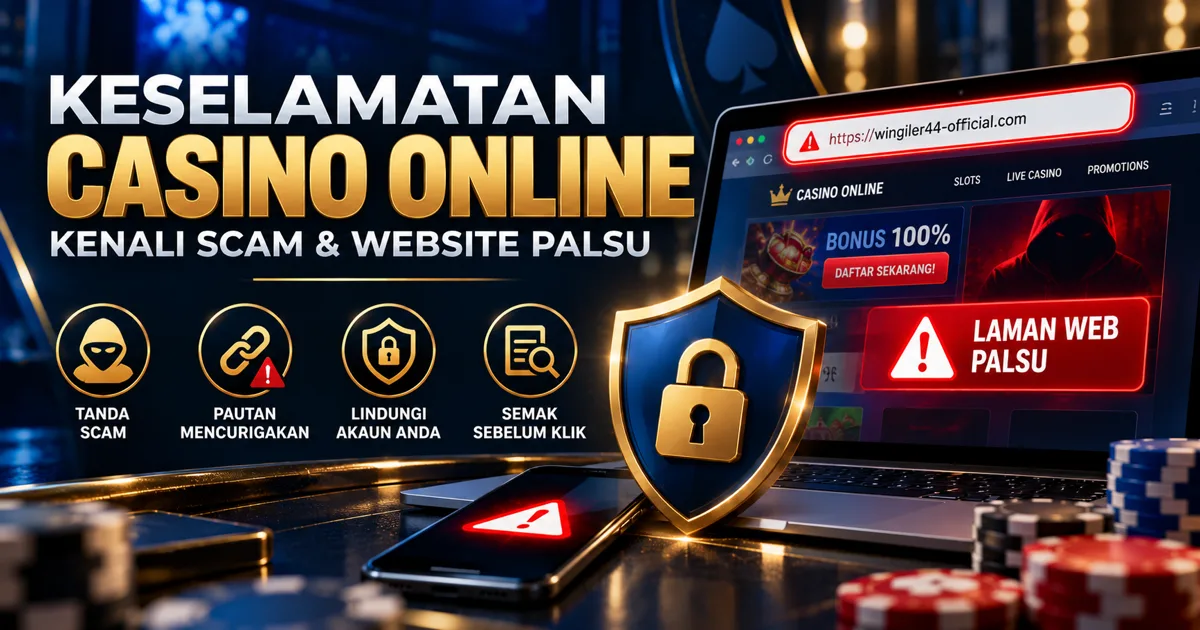
Have you ever received a WhatsApp message that suddenly offers an online casino bonus? Or found a website that uses the name and logo of a well-known platform but has a different URL?
Situations like these require attention because online fraud can occur through various methods, including fake websites, suspicious links and brand impersonation.
For users in Malaysia, understanding online casino safety is not just about protecting an account. It also involves knowing how to identify signs of fraud before sharing personal information or making any transaction.
This article explains several commonly used scam tactics, signs of a suspicious website and steps you can take if you suspect a website is unsafe.
Why Is Online Casino Safety Important?
Online casino websites can involve personal information, account details and financial transactions. If that information falls into the hands of irresponsible parties, users may face risks such as identity theft, account misuse or loss of money.
Threats you need to know about include:
- Fake websites that resemble genuine platforms.
- Phishing links sent through WhatsApp, Telegram or SMS.
- Social media accounts impersonating customer service.
- Requests for OTPs, passwords or banking information.
- Fake bonus offers used to obtain user information.
The important point is that a professional-looking website does not necessarily prove that a platform can be trusted.
Users need to carry out additional checks before taking any action.
6 Signs of a Suspicious Online Casino Website
Not every website that looks different is a scam. However, the following signs may indicate a higher security risk.
1. A URL Almost Identical to Another Website
One phishing tactic is to use a domain name that closely resembles the genuine website.
For example, scammers may replace one letter, add a number or use a different domain extension.
These small differences are easy to overlook, especially when users open a link on a phone.
What should you do?
Check the entire URL and do not rely solely on the displayed logo or name.
2. Bonus Offers That Are Too Attractive
Promotions that promise certain profits, guaranteed wins or withdrawals without any conditions should be evaluated carefully.
In casino games, outcomes cannot be guaranteed.
Therefore, claims such as “confirm menang” or “100% profit” are clear warning signs.
3. Requests for an OTP or Password
An OTP is a security code used to verify certain actions.
This code should not be shared with another person through messages, phone calls or social media.
If someone claims to represent a platform and asks for an OTP or password, stop communicating with them.
4. Pressuring Users to Make an Immediate Payment
Scammers sometimes use time pressure to prevent victims from carrying out checks.
For example:
- “Your account will be frozen in 10 minutes.”
- “Pay now to activate your withdrawal.”
- “The bonus will disappear if you do not deposit immediately.”
Messages like these do not necessarily prove fraud, but they are a strong reason to stop and independently verify the information.
5. Unclear Customer Service Information
A website that does not provide verifiable contact information may make it difficult for users to get help when a problem occurs.
However, the presence of a phone number or Telegram account alone also does not prove a platform's legitimacy.
Contact information needs to be checked together with other factors.
6. The Website Uses Suspicious Download Links
Be cautious if a website asks you to install an application file from an unknown source.
APK files obtained from untrusted sources may carry the risk of malware or data theft.
Avoid installing applications that request permissions unrelated to their functions.
How Do Online Casino Scams Usually Happen?
To understand the risks more clearly, here are three example situations.
Situation 1: A Fake Website Through Google or Social Media
A user searches for the name of an online casino platform.
They then find a link that uses a familiar-looking name and logo.
After opening the page, the user is asked to enter account information.
If the page is a phishing website, the information entered may be sent to the scammers.
Lesson: Do not assume that a search result or advertisement using a particular brand name is necessarily legitimate.
Situation 2: A Bonus Offer Through WhatsApp
A user receives a message from an unknown number offering a special bonus.
The message contains a link and asks the user to register or make an immediate payment.
After the payment is made, the person who sent the message can no longer be contacted.
Lesson: Offers sent through private messages need to be independently verified before any information or money is provided.
Situation 3: Customer Service Impersonation
Someone contacts a user and claims there is a problem with their account.
The person requests an OTP for verification.
If the OTP is shared, that party may try to access the account or approve a transaction without permission.
Lesson: Do not share an OTP or password with anyone.
Does Having HTTPS Mean a Website Is Safe?
Many users regard the padlock symbol in a browser or an HTTPS address as proof that a website can be trusted.
In fact, HTTPS indicates that the connection between the browser and website uses encryption.
It helps protect data during transmission, but does not prove that the website owner is legitimate or free from fraud.
Phishing websites can also use HTTPS. HTTPS does not necessarily mean a website is safe.
Therefore, website safety needs to be evaluated based on more than one factor.
These include the domain's identity, information transparency, source reputation and website behaviour.
For a more comprehensive explanation, refer to the guide on how to evaluate online casino websites.
How to Protect Personal Information and Accounts
Besides identifying suspicious websites, users also need to understand basic digital security measures.
Use a Unique Password
Avoid using the same password for several accounts.
If one account is compromised, using the same password can increase the risk to other accounts.
Enable Additional Verification If Available
Two-factor authentication, or 2FA, can help add a layer of security.
However, users still need to be cautious about phishing attempts that request verification codes.
Do Not Share Sensitive Information
Avoid sharing passwords, OTPs or banking details through messages with parties who cannot be verified.
Check Account Activity
If a service provides activity records or security notifications, check for any unrecognised changes.
Be Careful with Public Devices
Accessing an account through a public computer or shared device can increase the risk of information exposure.
For further guidance on account protection, read the Wingiler44 account security article.
What Should You Do If You Find a Fake Casino Website?
If you suspect a website is a scam, the action to take depends on whether you have shared information or made a payment.
If You Have Not Shared Information
Do not enter any account details, passwords or payment information.
Close the page and avoid opening the same link through other messages.
You can also save the URL for reporting purposes.
If You Have Already Entered a Password
Change the password through a channel that has been independently verified.
If the same password is used on another account, change that account's password as well.
Enable 2FA if available.
If You Have Already Shared Banking Information
Contact your bank or payment service provider immediately through an official channel.
Inform them that your information may have been exposed to an unknown party.
If You Have Already Transferred Money
Keep evidence of the transaction, messages and recipient information.
In Malaysia, victims of financial scams can contact the National Scam Response Centre (NSRC) on 997 for assistance. Contact your bank immediately as well.
Prompt action is important, but the return of money cannot be guaranteed.
How Do You Identify Wingiler44 Brand Information?
When searching for information about a brand, users may find various websites, social media accounts and links that use almost identical names.
This can cause confusion if those sources do not have a clear relationship with the brand concerned.
For readers who want to refer to content and guides published on this website, the Wingiler44 homepage provides access to brand information and content categories.
However, the presence of a brand name on a website does not by itself prove the operator's identity, licensing status or transaction security.
Users need to conduct independent checks before sharing information or using any service.
Website Safety and Gaming Risk Are Two Different Things
One point that is often overlooked is the difference between digital safety and the risks of casino gaming.
A website with a secure connection does not necessarily offer risk-free gaming.
Similarly, account security measures cannot guarantee game outcomes or eliminate the possibility of financial loss.
Therefore, users need to understand both aspects:
Digital safety involves protecting data, accounts and transactions.
Gaming risk involves uncertain outcomes and the possibility of losing money.
Both need to be considered separately.
Frequently Asked Questions About Online Casino Safety
1. How do I know whether an online casino website is a scam?
Warning signs include a URL that resembles another brand, requests for an OTP, offers of guaranteed profits and pressure to make an immediate payment. However, an evaluation needs to be based on several factors, not just one sign.
2. Is a website with HTTPS necessarily safe?
No. HTTPS protects the data connection, but does not guarantee the legitimacy of the website owner or prove that the page is free from fraud.
3. Can a fake casino website use a well-known brand name?
Yes. Scammers can imitate a brand's name, logo and design to deceive users.
4. What should I do if I have shared an OTP?
Immediately contact the relevant account provider or bank through an official channel. Check account activity and take any additional recommended security measures.
5. What should I do if I have transferred money to a scammer?
Contact your bank immediately, keep evidence of the transaction and seek assistance through NSRC 997 if it relates to financial fraud in Malaysia.
6. Do all online casino websites have the same risk?
Not necessarily. Security risks can vary based on the operator, security systems, information transparency and other factors. However, technical safety does not eliminate the financial risks of gambling.
7. Where can I get more information about Wingiler44?
Readers can refer to the Wingiler44 FAQ page for information published on this website.
Conclusion
Online casino safety is not only about choosing a strong password. It also involves the ability to identify fake websites, phishing links, identity impersonation and suspicious requests for information.
Some of the most important steps are checking the URL, not sharing OTPs, avoiding payments made under pressure and verifying information through trustworthy channels.
If you suspect that you have become a victim of fraud, act immediately by contacting your bank or the relevant party.
Reminder: This article aims to raise digital safety awareness and does not verify the legitimacy, licensing status or safety of any gambling platform. Gambling activities are subject to applicable laws and age restrictions.